
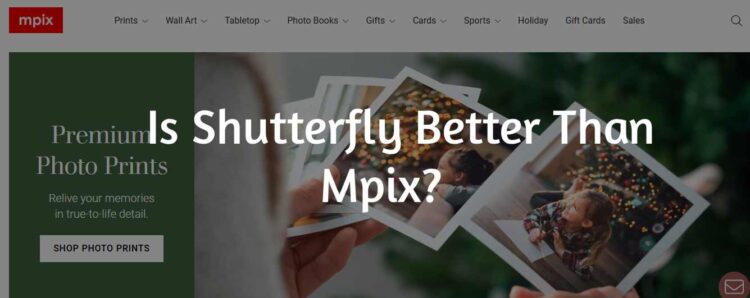
If you’re here, you’re probably stuck in that uncomfortable middle space where both options seem fine, but you don’t want to waste money or end up disappointed when the prints arrive.
You’re not asking which brand is more popular.
You’re asking which one actually looks better in real life.
That’s a fair question — and the honest answer is a little more nuanced than most comparisons make it seem.
Let’s walk through it calmly, without hype, so you can leave knowing exactly which one makes sense for you.
Quick Comparison Summary
-
Best overall quality: Mpix
-
Best for casual prints: Shutterfly
-
Best color accuracy: Mpix
-
Best for frequent deals: Shutterfly
-
Most consistent results: Mpix
-
Most convenient: Shutterfly
Now that you’ve seen the quick comparison, let’s slow down and walk through what actually makes these differences matter in real life.
What “Photo Print Quality” Actually Means
Before comparing brands, it helps to slow down and define what “quality” even means in real-world terms.
Most people don’t mean “lab specifications.”
They mean: Will I be happy when I hold it in my hands?
Here’s what usually matters.
Color accuracy and color profiles
This is about whether the printed photo looks like what you saw on your screen.
Good color accuracy means:
-
Skin tones don’t look off
-
Whites don’t turn yellow or gray
-
Blues and greens look natural, not oversaturated
Some labs aim for accuracy. Others lean toward “pleasing” color — brighter and warmer, even if it’s not technically correct.
Neither approach is wrong. It just depends on what you expect.
Sharpness and detail reproduction
This is where fine details matter — eyelashes, textures, subtle shadows.
Better labs tend to:
-
Preserve detail instead of smoothing it
-
Avoid artificial sharpening that creates halos
If you’ve ever felt a print looked slightly soft compared to your screen, this is usually why.
Paper types and finishes
Paper affects how light reflects and how color feels.
Things that matter:
-
Thickness (thin paper can feel cheap)
-
Surface (glossy, lustre, matte)
-
How fingerprints and glare show up
Two prints from the same file can feel completely different depending on paper alone.
Longevity and fade resistance
This is easy to overlook, but important if the photo will be displayed long-term.
Some prints are meant for:
-
Albums and short-term keepsakes
Others are made to: -
Hang for years without noticeable fading
Not everyone needs archival longevity — but it’s worth knowing what you’re paying for.
Mpix Print Quality Overview
Mpix tends to attract people who care about consistency and accuracy, even if they’re not professional photographers.
Printing process and lab standards
Mpix uses professional photo lab processes similar to what working photographers rely on. That usually means:
-
Controlled color output
-
Less aggressive automation
-
Fewer surprises when reordering
It’s built for repeatability, not speed at all costs.
Paper options and materials
Mpix offers fewer paper options than Shutterfly, but the tradeoff is consistency.
The papers generally:
-
Feel thicker
-
Have a more premium texture
-
Hold color well without looking overly processed
You’re not overwhelmed with choices, but the options they do offer are solid.
Color accuracy and calibration
This is where Mpix tends to stand out.
Colors usually come out:
-
Closer to what you edited or expected
-
More balanced
-
Less artificially warm or contrast-heavy
If you’ve ever edited a photo carefully and wanted it to stay that way, this matters.
Consistency and quality control
One of Mpix’s biggest strengths is consistency.
If you order the same print today and again in six months, the result is usually very close. That reliability builds trust over time.
Shutterfly Print Quality Overview
Shutterfly is built for convenience, volume, and accessibility. That’s not a criticism — it’s just a different goal.
Printing process and automation
Shutterfly relies heavily on automated color correction and large-scale production.
This helps with:
-
Speed
-
Lower cost
-
Handling huge order volumes
But it also means less nuance per image.
Paper options and finishes
Shutterfly offers a wide range of finishes and products, which can be appealing.
However:
-
Paper quality can feel thinner
-
Some finishes prioritize visual pop over subtle detail
It often looks good at first glance, especially for casual use.
Color handling and correction
Shutterfly applies automatic enhancements by default.
That can be helpful if:
-
Your photos come straight from a phone
-
Lighting wasn’t ideal
But it can also:
-
Oversaturate colors
-
Shift skin tones
-
Add contrast you didn’t ask for
You don’t always get full control over this.
Consistency across orders
This is where experiences vary the most.
Some orders look great.
Others feel slightly off — especially when reordering the same photo later.
That inconsistency is one of the most common frustrations people mention.
Mpix vs Shutterfly — Quality Comparison
This is where the differences become clearer.
Color accuracy comparison
Mpix is more faithful to the original image.
Shutterfly often adjusts colors to look brighter and more vibrant.
If accuracy matters, Mpix usually wins.
Sharpness and detail comparison
Mpix preserves detail more naturally.
Shutterfly sometimes smooths or sharpens automatically.
For everyday prints, this may not matter.
For detailed photos, it often does.
Paper quality comparison
Mpix paper generally feels heavier and more professional.
Shutterfly’s paper is fine, but not as substantial.
This is something people notice when holding both side by side.
Print consistency over time
Mpix is more predictable.
Shutterfly can vary depending on volume, timing, or production batch.
If you value reliability, this matters more than people expect.
When Shutterfly Might Be “Good Enough”
There are plenty of situations where Shutterfly makes sense.
Casual printing and everyday use
If you’re printing:
-
Vacation photos
-
Family snapshots
-
School memories
You’ll probably be happy with Shutterfly.
The differences are subtle unless you’re looking closely.
Promotions and pricing trade-offs
Shutterfly runs frequent discounts. That matters if you’re printing in bulk.
For casual use, saving money can easily outweigh small quality differences.
When Mpix Is the Better Choice
Mpix tends to shine when quality actually matters to you.
Professional or enthusiast photography
If you’ve edited your photos carefully or care about how they look in print, Mpix gives you more control and predictability. If you’re already leaning toward Mpix, checking for current Mpix discounts can help soften the price difference without compromising on quality.
Color-sensitive or display prints
For wall art, gifts, or anything you’ll see daily, the extra quality often feels worth it.
It’s less about perfection — more about confidence that it’ll look right.
Final Verdict — Is Shutterfly Better Quality Than Mpix?
Short answer:
No — Mpix generally offers better print quality.
But that doesn’t automatically mean it’s the better choice for you.
-
If you value accuracy, consistency, and a more professional finish → Mpix
-
If you want convenience, deals, and “good enough” results → Shutterfly
Neither choice is wrong. They’re built for different expectations.
The real question isn’t which one is better, it’s which one matches how much you care about the final result.
No Comments
Leave Comment