
Key Takeaways
-
Coupon codes are not discounts themselves; they are triggers that activate specific offers defined by a merchant’s pricing system.
-
Every coupon code works within predefined rules such as eligibility, expiry, minimum spend, product exclusions, and usage limits, which explains why some valid codes fail at checkout.
-
Percentage discounts, fixed-amount discounts, free shipping offers, and cashback reduce prices in different ways and can produce very different final savings.
-
The final price after applying a coupon code depends on how discounts interact with taxes, shipping fees, caps, and marketplace-specific pricing rules.
-
Valid coupon codes are distributed through controlled channels and often vary by timing, user status, device, or region rather than being universally available.
-
High discount percentages do not always mean better value; real savings depend on base price, restrictions, and whether the offer fits a genuine purchase.
-
Coupon codes influence buying decisions through psychological factors like urgency, perceived value, and exclusivity, not just through monetary savings.
-
Using coupon codes effectively requires understanding offer mechanics and discount behavior, not just searching for random promo codes.
Coupon codes have become an integral part of the global online shopping ecosystem, shaping how consumers make purchase decisions and how brands drive sales, retention, and conversion. The global digital coupon market alone was valued at an estimated USD 9.12 billion in 2024 and is projected to expand to approximately USD 20.23 billion by 2033, reflecting increasing adoption of online and mobile promotions across retail and e-commerce sectors. (Source: Market Growth Reports)
Consumer behaviour patterns also demonstrate widespread engagement with coupon offers. In the United States, more than 165 million adults, roughly 62% of the adult population redeemed digital coupons in 2024, primarily using smartphones, highlighting how pervasive coupon usage has become in everyday shopping. Capital One Shopping Surveys consistently show that over 90% of consumers worldwide have used at least one coupon or promo code during purchases, indicating that coupon interaction is nearly universal among modern shoppers. (Source: CouponFollow)
When shoppers actively seek savings, their decisions are influenced significantly by coupon availability. Research highlights that 83% of consumers acknowledge that vouchers or discounts influence their buying behaviour, with many shoppers completing purchases sooner or switching brands due to offers — a clear reflection of coupon codes’ impact on purchase intent. Opia Furthermore, consumers who use coupons often spend more than those who do not; some studies report that coupon users may spend around 24% more on average than non-coupon users, indicating that well-structured coupon programs can increase basket size and overall sales for retailers.
Coupon usage also reflects evolving digital behaviour. A substantial proportion of consumers, including around 62% of U.S. online shoppers, actively search for promo codes before making online purchases, while many others use retailer apps or coupon platforms to find valid discounts, blending search behaviour with purchasing intent and reinforcing the importance of coupons in the digital shopping funnel. (Source: DemandSage+1)
These figures underscore that coupon codes are far more than simple strings of text entered at checkout; they are strategic tools that influence market-level behaviour, shape consumer expectations, and enable brands to manage pricing incentives, improve conversion rates, and deepen customer loyalty across channels. Understanding how coupon codes function beneath the surface — from creation and validation to consumer usage patterns — empowers shoppers to optimise savings and helps businesses design offers that align with real purchasing motivations.
You can explore active offers across different stores on MamaSV Stores.
What a Coupon Code Really Is (And What It Is Not)
A coupon code is not the discount itself, and it is not a guarantee of savings. Instead, it functions as an access key that activates a predefined offer inside an online store’s pricing system. When a shopper enters a coupon code during checkout, the system checks whether that code matches an existing promotional rule. If all conditions are met, the offer linked to that code is applied to the order.
This distinction is important because many shoppers assume that a coupon code automatically lowers the price, regardless of circumstances. In reality, the discount already exists within the system, and the code merely signals eligibility. The same discount may sometimes apply automatically without a code, while in other cases a code is required to unlock it. Promotions, discounts, and coupon codes are closely related, but they are not interchangeable concepts.
A promotion refers to the broader campaign created by a merchant, such as a seasonal sale or a first-time customer offer. A discount refers to the actual reduction in price, whether that is a percentage, a fixed amount, or free shipping. The coupon code is simply the mechanism that connects the shopper to that offer when specific conditions are satisfied. Understanding this difference is essential before learning how to use coupon codes smartly to maximize real savings.
How Coupon Codes Work From Start to Finish
Behind every coupon code is a structured process that begins long before a shopper reaches the checkout page. Merchants design coupon codes with specific goals in mind, such as increasing sales volume, attracting new customers, encouraging app downloads, or clearing older inventory. These goals determine the type of discount offered, how long it lasts, and who can use it.
Once a coupon code is created, it is distributed through selected channels. Some codes are shared publicly through newsletters or promotional pages, while others are restricted to specific audiences, such as students, first-time buyers, or app users. This controlled distribution explains why two shoppers may see different coupon offers for the same store at the same time.
When a shopper enters a coupon code during checkout, the e-commerce system evaluates it against a set of predefined rules. These rules may include minimum purchase requirements, product exclusions, regional limitations, or usage caps. Only when all conditions align does the system apply the discount and recalculate the order total. Taxes, shipping costs, and discount limits are then factored in to determine the final price.
Understanding this process helps explain why coupon codes sometimes appear to “not work,” even when they are valid. In most cases, the issue is not the code itself but a mismatch between the order and the conditions attached to the offer.
How Discount Is Calculated After Applying a Coupon Code
Let’s understand how a coupon code works with a real example.
We have a store Roborock Discount Codes, on this page you can see an offer “Get $10 Off Orders.” This simply means that when you apply a valid coupon code, the store will reduce $10 from your order total.
Now, let’s say you want to buy the Roborock Saros 10R Robot Vacuum with Multifunctional Dock 4.0. The original price of this product is $999, as shown on the product page. Lets have a look:
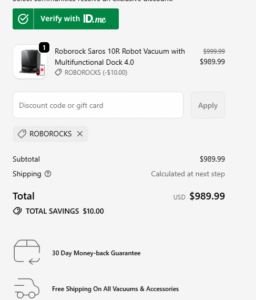
When you apply the working Roborock coupon code from MamaSV at checkout, the price changes immediately. As you can see in the image above, the system subtracts $10 from the original price, and the total updates from $999 to $989 within seconds.
That’s it. This is how coupon codes work in real life.
You don’t need to calculate anything yourself. The coupon code tells the store to apply the discount automatically, and you see the reduced price before completing the payment.
How Coupon Codes Function in Online Shopping Systems
Modern online shopping platforms rely on automated pricing engines that manage discounts and promotions in real time. These systems are designed to apply coupon codes consistently and prevent misuse, which is why they follow strict validation rules. Once a code is entered, the system immediately checks whether it can be applied to the current order, the customer account, and the selected products.
Some coupon codes are designed to work only on specific platforms, such as mobile apps or desktop websites. This is often done to encourage shoppers to use a particular channel or to track user behavior more accurately. In these cases, a coupon code may be valid but still fail if it is entered in the wrong environment. This behavior is intentional and reflects the merchant’s promotional strategy rather than a technical error.
Safety and Legitimacy of Online Coupon Codes
Using coupon codes is generally safe, provided they come from legitimate sources. Coupon codes themselves do not have the ability to access personal information, payment details, or account data. They simply trigger predefined pricing rules within an online store’s system. However, problems can arise when users rely on untrustworthy websites that promote fake or misleading offers.
Unsafe coupon websites often promise unrealistic discounts, require unnecessary downloads, or redirect users through suspicious links. Legitimate coupon sources, on the other hand, focus on transparency. They clearly explain where their offers come from, how often they are verified, and what conditions apply. Knowing how to distinguish between reliable and unreliable sources is essential for avoiding frustration and potential security risks.
Why Coupon Codes Influence Buying Decisions
Coupon codes are effective because they tap into basic principles of human decision-making. Seeing a discount creates a reference point that makes the reduced price feel more valuable, even if the actual savings are modest. Time-limited offers increase urgency, while exclusive codes create a sense of privilege or reward.
These psychological factors explain why shoppers are more likely to complete a purchase when a coupon code is available. The feeling of saving money often matters as much as the amount saved. Over time, this behavior has shaped how online retailers design their promotions, leading to increasingly personalized and targeted coupon offers.
How Coupon Codes Evolved Over Time
The concept of couponing existed long before online shopping. Early coupons were printed and distributed through newspapers, mailers, and product packaging. As e-commerce grew, these physical coupons were replaced by digital codes that could be entered during checkout. This shift allowed merchants to track usage, limit abuse, and tailor offers to specific audiences.
Today, coupon systems are more advanced than ever. Many online stores use data-driven tools to adjust discounts based on customer behavior, location, or purchase history. This evolution explains why modern coupon codes feel more dynamic and why the same store may offer different deals to different users.
How to Find Valid Coupon Codes Without Wasting Time
Finding valid coupon codes is less about searching harder and more about understanding how and where legitimate offers are distributed. Most coupon codes that actually work originate from controlled channels, because merchants want to limit abuse and track performance. When shoppers rely on random search results or outdated pages, they often encounter expired or restricted codes that no longer match the original offer conditions.
Reliable coupon codes are typically published close to the source. Official newsletters, verified coupon platforms, and merchant-run promotions tend to reflect the most current offers because they are updated in coordination with the retailer’s pricing system. In contrast, many failed coupon attempts happen because the code was copied, reposted, or indexed long after the promotion ended. Understanding this timing aspect is essential, as coupon validity is closely tied to promotional cycles rather than permanent availability.
Another important factor is context. A coupon code that works for one user may not work for another due to account status, location, or device type. This is why valid coupon discovery is not only about the code itself but also about whether the user qualifies for the associated offer at that moment.
Why Coupon Codes Stop Working Suddenly
One of the most frustrating experiences for online shoppers is applying a coupon code that worked recently but suddenly shows an error. In most cases, this does not mean the coupon code is fake or misleading. Coupon codes are controlled by systems that react to time, usage, inventory, and user behavior, and any change in these factors can deactivate a code instantly.
Many coupon codes have usage limits that are not publicly visible. Once a certain number of users redeem the offer, the system automatically disables it, even if the expiration date has not yet passed. This is common during high-demand promotions, where a discount is intentionally limited to control costs.
Coupon codes may also stop working due to inventory changes. If a discount was linked to specific products or categories and those items sell out, the offer may no longer apply. In other cases, the system may restrict the coupon based on location, account history, or unusual usage patterns that trigger fraud-prevention rules.
Understanding these failure scenarios helps users realize that a non-working coupon is usually the result of system rules, not deception.
How Merchants Decide Which Coupon Codes to Release
Coupon codes are not created casually. Every discount a merchant offers is tied to a business decision that balances sales growth with profitability. Before releasing a coupon code, businesses evaluate factors such as product margins, current demand, inventory levels, and customer acquisition costs.
For example, a merchant may release a generous coupon code to attract new customers, even if it results in lower short-term profit. In contrast, for products with tight margins or high demand, discounts may be smaller or completely absent. This is why some categories, like fashion, see frequent coupon codes, while others, like electronics, are more restricted.
Merchants also analyze customer lifetime value. If a discount is likely to bring in repeat buyers, it is considered a worthwhile investment. This logic explains why first-time user coupon codes are often stronger than offers available to returning customers.
Coupon Codes vs Automatic Discounts
Not all discounts require a coupon code. Automatic discounts are applied by the system without any manual input from the user, often during sales events or targeted promotions. This creates confusion, as shoppers may assume they need a coupon code even when the best price is already applied.
Automatic discounts are commonly used during sitewide sales, clearance events, or personalized offers triggered by user behavior. In these cases, adding a coupon code may not provide any additional savings and may even be blocked by the system.
Understanding the difference between coupon-based and automatic discounts helps users avoid unnecessary searching and recognize when a visible price reduction already represents the best available deal.
Regional and Legal Differences in Coupon Codes
Coupon codes do not behave the same way in every country. Regional pricing laws, tax structures, and consumer protection rules influence how discounts are displayed and applied. In some regions, discounts must include taxes in the advertised price, while in others taxes are added later, affecting how savings appear at checkout.
Geographic restrictions are also common. A coupon code valid in one country may not work in another due to licensing agreements, shipping limitations, or regional marketing strategies. This is especially relevant for international shoppers who access global websites.
Recognizing these regional differences helps users set realistic expectations and explains why certain coupon codes are location-specific.
Coupon Code Abuse and Why Systems Restrict Users
Coupon systems are designed to prevent misuse. When unusual patterns are detected, such as repeated use of the same code across multiple accounts or devices, the system may restrict access without explanation. This can result in messages stating that a coupon is not available for a specific user.
These restrictions are not personal; they are automated safeguards. Merchants use them to protect promotions from being exploited beyond their intended scope. In some cases, loyal users may even receive fewer public coupons because the system prioritizes acquisition over retention.
Understanding this dynamic helps users avoid misinterpreting restrictions as unfair treatment.
Coupon Codes vs Cashback vs Loyalty Rewards
Coupon codes provide immediate savings, while cashback and loyalty rewards often deliver value later. Cashback typically returns a percentage of the purchase amount after completion, while loyalty programs accumulate points that can be redeemed in the future.
Each method has advantages. Coupon codes reduce the upfront cost, which can influence purchase decisions. Cashback and loyalty rewards may offer greater long-term value but require patience and successful tracking.
Choosing the best option depends on the purchase context. For one-time purchases, instant discounts may be more appealing. For frequent shoppers, loyalty rewards can offer consistent savings over time.
Coupon Codes in High-Ticket vs Low-Ticket Purchases
The effectiveness of a coupon code often depends on the price of the item. For low-cost products, small discounts may feel insignificant, while fixed-amount coupons can provide noticeable value. For high-ticket items, percentage discounts may offer substantial savings but are often capped to limit losses.
This pricing behavior reflects margin sensitivity. Products with high margins allow for more flexible discounts, while low-margin products require tighter controls. Understanding this helps users evaluate whether a coupon code truly offers value for a specific purchase.
The Lifecycle of a Coupon Code
Every coupon code follows a lifecycle. It begins with creation, where rules and limits are defined. It then enters a distribution phase, where it is shared through selected channels. As users redeem the code, usage increases until the promotion reaches its peak.
Eventually, the coupon code is throttled or expires. Some codes are archived and never reused, while others follow recurring patterns tied to seasonal promotions. Observing these cycles can help users anticipate future discounts rather than relying on expired codes.
When Using a Coupon Code Is Not the Best Option
Discounts do not always mean savings. In some cases, prices are temporarily raised before a coupon is applied, creating the illusion of a better deal. This practice makes it important to compare prices over time rather than relying solely on discount labels.
Waiting for a different promotion, such as a sitewide sale or automatic discount, can sometimes result in a lower final price than applying a coupon code immediately. Understanding this prevents impulse purchases driven by artificial urgency.
How to Read Coupon Terms Like a Pro
Coupon terms may appear complex, but they follow predictable patterns. Phrases like “up to,” “selected items,” or “limited time” indicate restrictions that affect how broadly a discount applies. Minimum purchase requirements and exclusion lists further define eligibility.
By carefully reading these terms, users can quickly determine whether a coupon code fits their intended purchase. This reduces frustration and increases the likelihood of successful savings.
What Makes a Coupon Code “Good” or Worth Using
Not all coupon codes provide meaningful value, even when they are valid. A good coupon code is one that creates real savings after all conditions are applied, rather than simply advertising a discount that is difficult to access. Many offers appear attractive on the surface but include restrictions that significantly reduce their usefulness, such as high minimum order values or exclusions on popular products.
The quality of a coupon code also depends on timing. A moderate discount combined with a seasonal sale or free shipping can often produce better overall savings than a higher standalone discount applied at full price. This is why experienced shoppers evaluate coupon codes in relation to the current pricing environment instead of viewing them in isolation.
Another overlooked factor is flexibility. Coupon codes that apply across a wide range of products or categories tend to offer more consistent value than highly targeted codes. When assessing whether a coupon code is worth using, the key question is not just how large the discount looks, but how easily it fits into a real purchase scenario.
Understanding Percentage Discounts Versus Fixed-Amount Discounts
Percentage-based discounts and fixed-amount discounts reduce prices in different ways, and the difference can significantly affect the final cost of an order. Percentage discounts scale with the total purchase amount, meaning the savings increase as the order value rises. Fixed-amount discounts, on the other hand, provide a set reduction regardless of how much is spent beyond the minimum requirement.
In practice, percentage discounts tend to benefit larger purchases, while fixed-amount discounts can be more effective for smaller orders. However, many fixed-amount coupon codes include minimum spending thresholds that limit their usefulness. Additionally, percentage discounts often come with caps that prevent unlimited savings, especially during high-value purchases.
Understanding this distinction helps explain why two coupon codes with different formats may produce very different results at checkout, even if they appear similar at first glance.
How Discount Calculations Actually Work at Checkout
When a coupon code is applied, the discount is rarely calculated in isolation. Most e-commerce systems apply discounts to the subtotal before taxes, shipping, or additional fees are added. This means the final price may differ from what a shopper initially expects, especially if shipping costs are high or taxes vary by region.
For example, a percentage discount applies only to eligible items, not necessarily the entire cart. If certain products are excluded or if shipping is not discounted, the overall savings may appear smaller than anticipated. Fixed-amount discounts may also be capped or adjusted if the order does not meet all conditions.
This layered calculation process explains why understanding how discounts interact with the checkout system is just as important as finding the coupon code itself.
How “20% Off” Discounts Really Translate Into Savings
A percentage discount like twenty percent off is often used as a benchmark for a “good deal,” but its actual value depends entirely on the base price. A twenty percent discount on a low-cost item results in minimal savings, while the same percentage applied to a larger purchase can produce a substantial reduction.
This is why evaluating discounts in absolute terms, rather than percentages alone, leads to better decision-making. Shoppers who understand this concept are less likely to be influenced by high-percentage promotions that deliver limited real-world value.
Free Promo Codes and What “Free” Actually Means
Free promo codes usually refer to offers that do not require a minimum purchase to activate a benefit, but the term “free” can be misleading. In many cases, free promo codes provide free shipping, bonus items, or access to services rather than a direct price reduction. These offers can be valuable, especially when they eliminate additional costs that would otherwise make a purchase less appealing.
However, free promo codes are still governed by rules. They may apply only to standard shipping methods, specific regions, or selected products. Understanding these limitations helps prevent disappointment and allows shoppers to evaluate whether a free offer genuinely improves the overall value of an order.
Why Free Coupon Sources Matter
Legitimate coupon codes are always free to use. Any platform that requires payment to access coupon codes is not operating in the interest of the consumer. Merchants issue coupon codes as part of their marketing strategy, and reliable coupon platforms earn revenue through partnerships, not by charging users.
This distinction is important because it reinforces trust. When users know that coupon codes should never cost money, they are better equipped to avoid misleading offers and focus on genuine savings opportunities.
How Coupon Codes Interact With Different Shopping Categories
Coupon codes behave differently depending on the type of product or service involved. In electronics marketplaces, discounts are often limited due to manufacturer pricing policies, which explains why coupon codes may exclude high-demand devices. Grocery platforms frequently use automatic coupons that apply without manual entry, reflecting the fast-paced nature of everyday purchases.
Home improvement products often rely on seasonal promotions and bulk discounts, while fashion websites may allow limited stacking of sales and coupon codes under specific conditions. These category-specific behaviors are not random; they reflect how pricing strategies vary across industries.
Understanding these differences helps shoppers set realistic expectations and choose the right moment to apply a coupon code.
Verifying Whether a Coupon Code Is Still Valid
Coupon code validity depends on time, eligibility, and usage limits. A code that worked yesterday may fail today if the promotion has ended or if the usage cap has been reached. This is why verification is an ongoing process rather than a one-time check.
Indicators such as recent verification dates, clear terms, and user success patterns can help determine whether a coupon code is still active. While no method guarantees success every time, understanding validity signals significantly improves the chances of applying a working code.
How Coupon Codes Affect Final Prices on Marketplaces
Online marketplaces often apply additional layers to pricing, such as service fees, taxes, or seller-specific rules. Coupon codes typically apply only to the product price and may not reduce these extra charges. As a result, the final price after applying a coupon may still be higher than expected.
This does not mean the coupon code failed; it reflects how marketplace pricing structures work. Recognizing this distinction helps shoppers avoid misinterpreting the outcome of a discount application.
Preparing to Use Coupon Codes More Strategically
At this stage, the mechanics, limitations, and value dynamics of coupon codes should be clear. The next step is learning how to use this knowledge strategically by combining timing, offer types, and verification methods to maximize savings without unnecessary effort.
Coupon Code Stackability and Why It Is Often Misunderstood
Coupon code stackability refers to the ability to combine more than one discount or promotional benefit within a single purchase. While many shoppers assume that multiple coupon codes can be applied together, most e-commerce systems are intentionally designed to restrict stacking. This limitation exists because merchants need to control margins, prevent abuse, and maintain predictable pricing outcomes.
In practice, stackability usually occurs across different offer types rather than multiple coupon codes. For example, a shopper may be able to use a percentage discount coupon alongside free shipping or cashback, but not two percentage-off codes at the same time. When stackability is allowed, it is explicitly defined within the promotion’s rules rather than left to chance.
Misunderstandings around stackability often arise because promotional messaging focuses on the discount itself rather than the conditions attached to it. By recognizing that each coupon code operates within a structured offer system, shoppers can better anticipate which combinations are possible and which are not.
Subscription and First-Time User Coupon Codes Explained
Subscription services and digital platforms frequently rely on coupon codes as a way to reduce entry barriers for new users. These offers are structured differently from retail coupon codes because their primary goal is not immediate profit but long-term customer retention. As a result, first-time user coupon codes often appear more generous, offering free trials, extended access, or significant introductory discounts.
These coupon codes are typically tied to account status rather than purchase behavior. Once a user has redeemed a first-time offer, the system permanently changes their eligibility, which explains why the same code cannot be reused. This approach allows subscription services to balance growth incentives with sustainability, while still providing meaningful value to new customers.
Understanding this distinction helps users set realistic expectations and avoid repeatedly searching for codes that are intentionally limited to a single use.
App-Only and Referral Coupon Codes as Acquisition Tools
App-only and referral-based coupon codes represent another category of targeted promotions. These codes are designed to encourage specific actions, such as installing an app or inviting new users to a platform. Because these actions have measurable value for the merchant, the associated discounts are often structured to feel exclusive or time-sensitive.
App-only coupon codes usually rely on device-level tracking, which is why they may fail when entered on a desktop browser. Referral codes, on the other hand, connect two users within the system, rewarding both parties when predefined conditions are met. In both cases, the coupon code functions as a behavioral trigger rather than a general discount.
Recognizing these mechanics helps explain why some coupon codes feel highly personalized and why they may disappear once the desired action has been completed.
How Coupon Codes Influence Final Pricing Decisions
Beyond reducing prices, coupon codes influence how shoppers perceive value and timing. The presence of a coupon code can shift a purchase from “consider later” to “buy now,” even when the savings are modest. This effect is amplified when the offer appears limited or exclusive, reinforcing urgency.
From the merchant’s perspective, this behavior is intentional. Coupon codes are often deployed at moments where hesitation is highest, such as during cart abandonment or seasonal transitions. Understanding this interaction between pricing and decision-making allows shoppers to recognize when a coupon code genuinely improves value and when it simply accelerates a purchase they might not otherwise make.
Why Some Coupon Codes Are Invisible or Personalized
Not all coupon codes are publicly available. Many modern promotions are generated dynamically based on user behavior, location, or purchase history. These personalized coupon codes may never appear on public coupon pages, yet they play a significant role in modern pricing strategies.
This personalization explains why two users visiting the same website may see different offers or receive different coupon codes via email. Rather than indicating unfair pricing, this approach reflects the increasing sophistication of digital marketing systems and their ability to tailor incentives to individual users.
Common Misconceptions About Coupon Codes
One of the most persistent misconceptions is that expired coupon codes are useless. In reality, expired codes often signal recurring promotion patterns. By observing when and how offers expire, shoppers can better predict future discounts. Another common belief is that higher discount percentages always represent better value, which ignores factors such as minimum spend requirements, exclusions, and price inflation.
There is also a widespread assumption that all coupon codes are publicly accessible. As discussed earlier, many offers are intentionally restricted, and their absence from public listings does not mean they do not exist.
Clarifying these misconceptions is essential for developing a realistic and effective approach to saving with coupon codes.
Using Coupon Codes Strategically Instead of Randomly
Effective use of coupon codes requires a shift from random searching to informed decision-making. Timing plays a crucial role, as many promotions follow predictable cycles tied to seasons, product launches, or marketing campaigns. Combining this timing awareness with an understanding of discount types allows shoppers to maximize savings without excessive effort.
Another strategic element is comparison. Evaluating a coupon code against alternative offers, such as automatic discounts or cashback, often reveals better options that are less visible. This broader perspective transforms coupon usage from a guessing game into a deliberate savings strategy.
Why This Knowledge Matters Before Using Brand Coupon Pages
Before visiting brand-specific coupon pages, it is important to understand how coupon codes function as a system. Without this foundation, shoppers may misinterpret failed codes, overlook better offers, or assume that a discount does not exist simply because a code did not apply.
This guide is designed to provide that foundation. By understanding the mechanics, limitations, and strategic value of coupon codes, users are better equipped to evaluate any offer they encounter, regardless of the store or platform involved.
Final Perspective: How Coupon Codes Actually Work in Practice
Coupon codes are not shortcuts or loopholes; they are structured tools embedded within pricing systems. They exist to balance consumer savings with merchant objectives, operating within clearly defined rules that prioritize control and predictability. When used with understanding rather than guesswork, coupon codes can significantly reduce costs and improve purchasing decisions.
This complete guide has explained coupon codes from their origin to their practical application, emphasizing how offers are created, validated, and applied. With this knowledge, users can approach online discounts with confidence, clarity, and realistic expectations.

No Comments
Leave Comment